
Baked Feta Spaghetti Squash
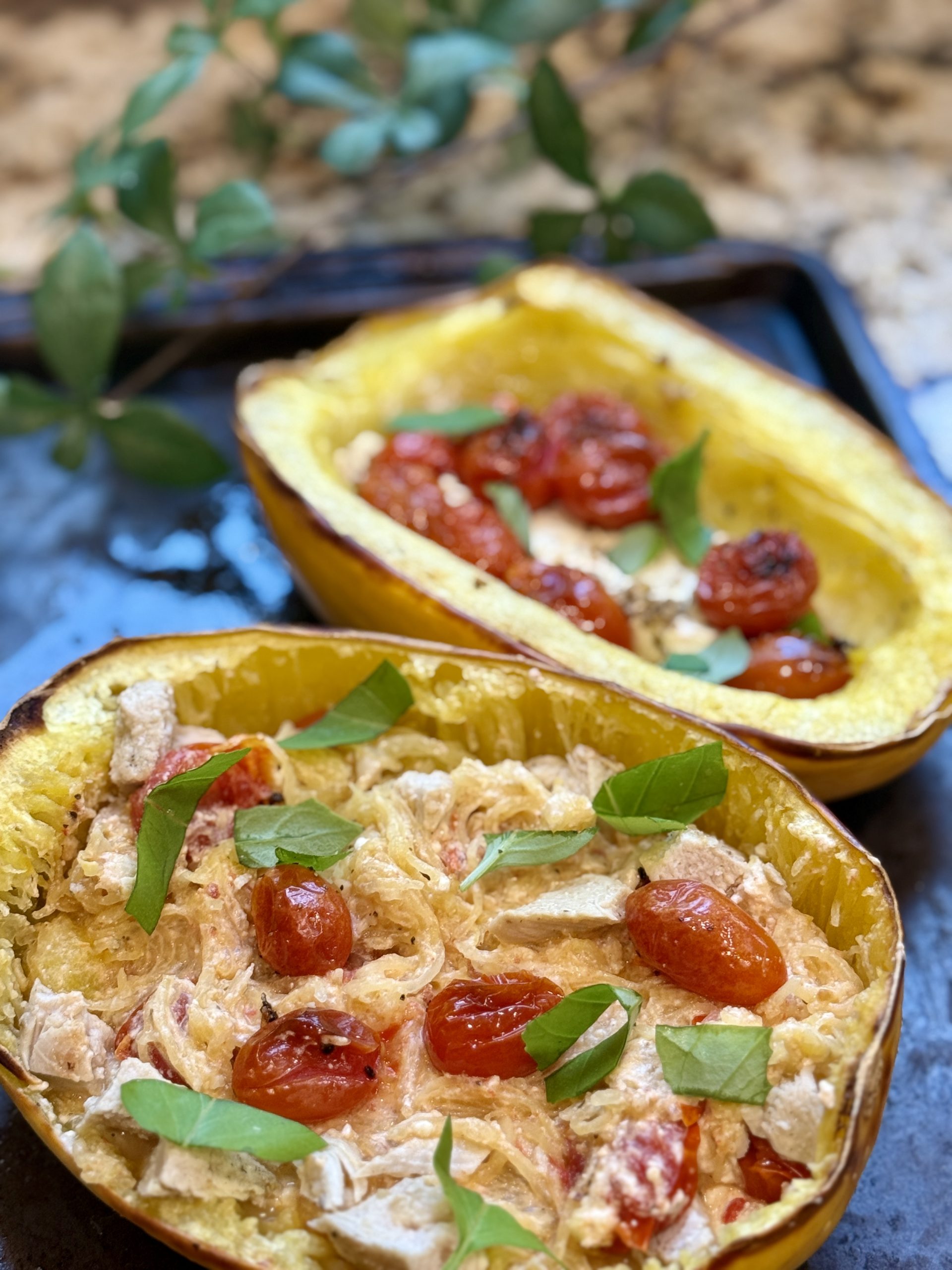
If you loved the viral baked feta pasta trend, this is the version you make when you want all that creamy, garlicky, tomato-forward flavor without the pasta. A whole block of feta gets nestled right into each half of a roasted spaghetti squash, surrounded by cherry tomatoes, garlic, and olive oil, and the whole thing goes into the oven together. An hour later the squash is fork-tender, the feta is melted and creamy, and the tomatoes have burst into a silky, deeply flavored sauce that coats every strand of squash when you scrape it together with a fork.
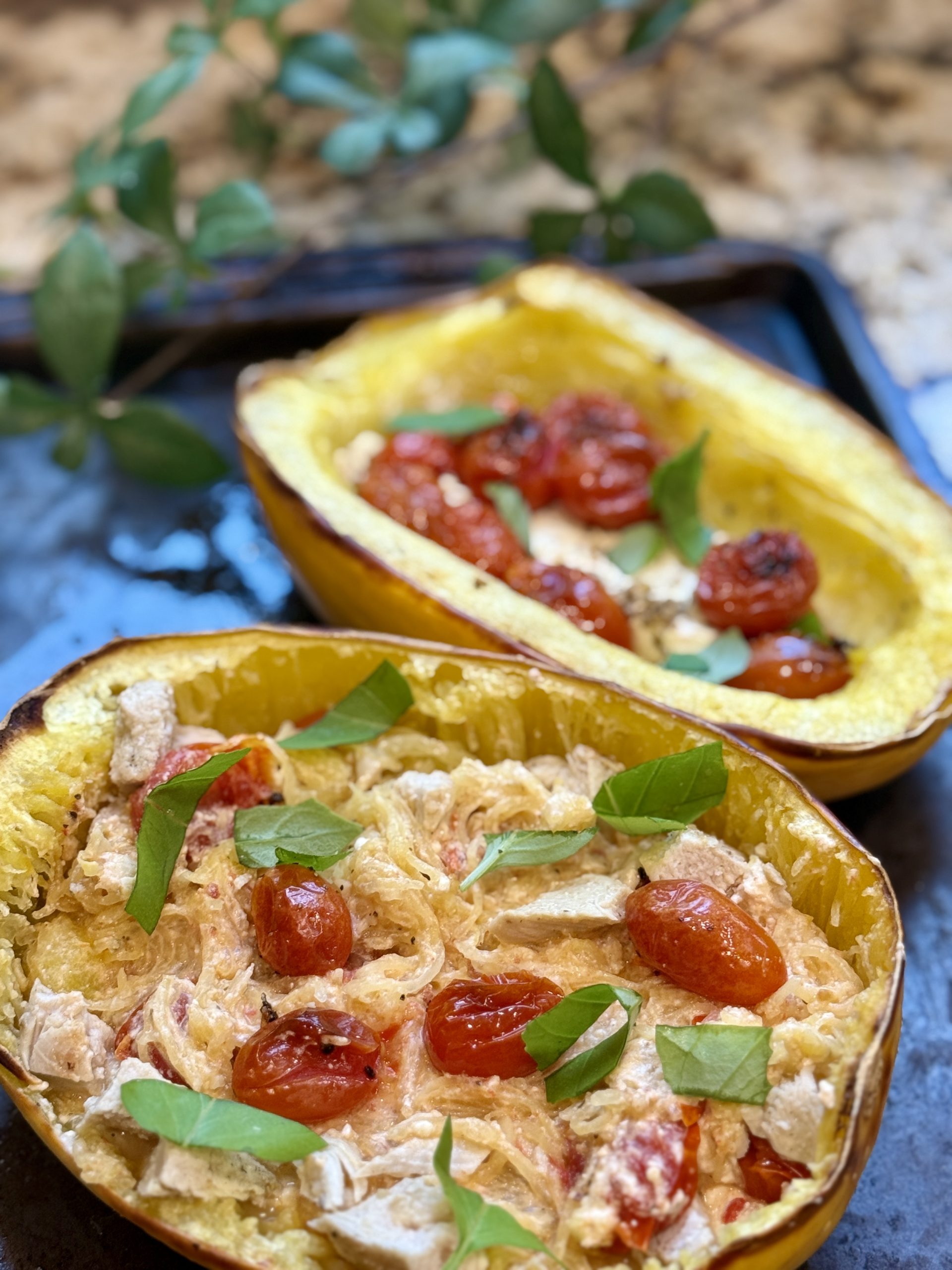
The genius of this recipe is the built-in serving vessel. The squash halves contain everything while it bakes, which means the feta steams into the squash as it roasts and the flavors concentrate together in a way you can’t replicate by baking them separately. It’s low-carb without being low-flavor, and it’s genuinely satisfying in a way that a lot of lighter dinners aren’t. This is the recipe that converts spaghetti squash skeptics.
Ingredients Needed to Make Baked Feta Spaghetti Squash
A short list of ingredients that do a lot of work together. Here’s what you need:
The Squash and Cheese
- Medium spaghetti squash (one squash makes four servings)
- Feta cheese, block form (use 4 oz per half for a lighter sauce, 6 to 8 oz for a richer result; divided into two pieces so each squash half gets its own block)
- Extra virgin olive oil, divided between the squash and the tomato mixture
The Tomato Mixture
- Cherry tomatoes (they burst during roasting and become the base of the sauce)
- Garlic cloves, minced
- Italian seasoning
- Kosher salt and black pepper, to taste
To Finish
- Fresh basil, chopped (optional but highly recommended)
- Extra feta or seasoning to taste
How to Make Baked Feta Spaghetti Squash
One baking dish, minimal prep, and just under an hour in the oven. Here’s how it comes together.
Step 1: Prep and Season the Squash
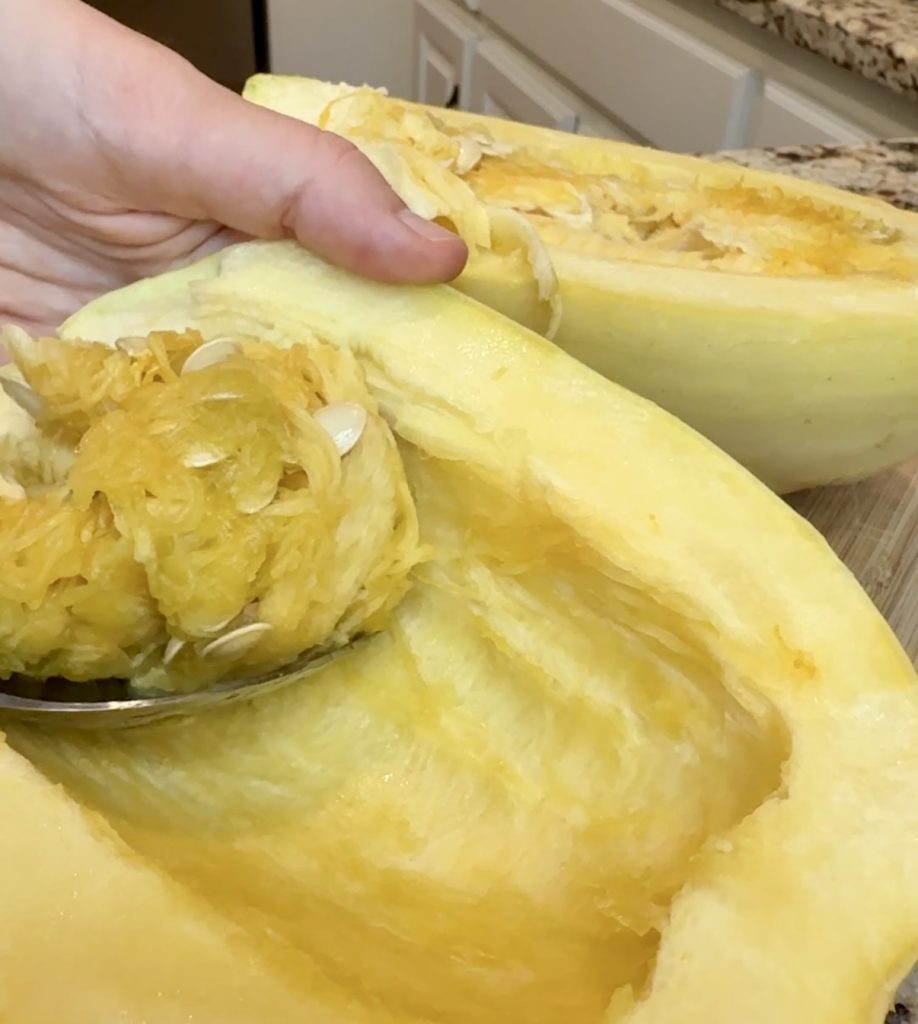
Preheat the oven to 400°F (200°C). Carefully cut the spaghetti squash in half lengthwise. A sharp chef’s knife and a firm, steady hand are important here since raw spaghetti squash is dense and can be tough to cut through. If the squash is very difficult to cut, microwave it for 2 to 3 minutes first to soften the skin slightly. Scoop out the seeds and fibrous strands from the center of each half with a spoon and discard. Place the halves cut-side up in a baking dish, casserole dish, or rimmed baking sheet. Drizzle with about half the olive oil and season with salt and pepper.
Step 2: Add the Feta
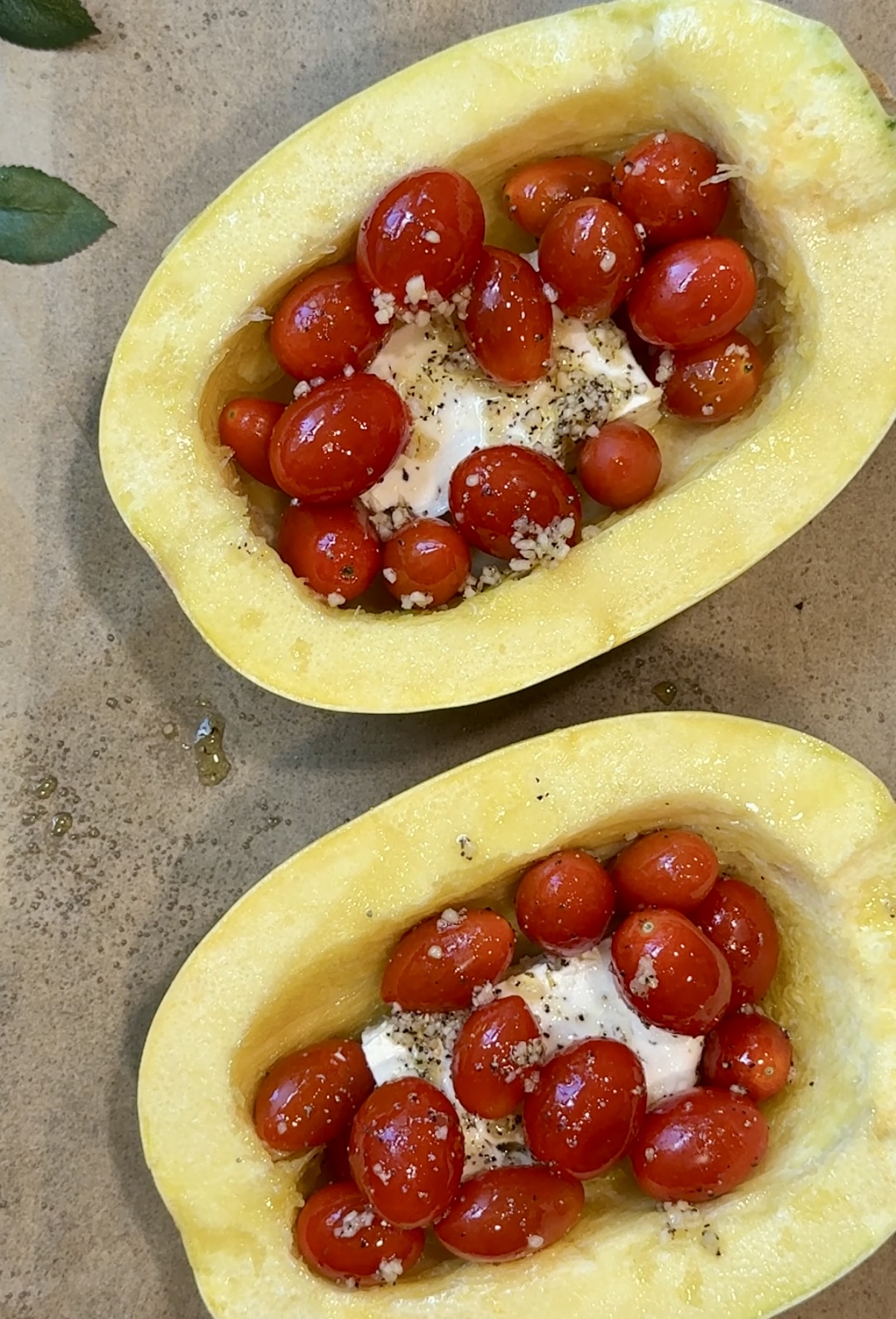
Place one block of feta cheese in the center of each squash half, pressing it gently into the cavity. This is where the magic happens. As the squash roasts, the feta softens and steams into the squash rather than just sitting on top, which produces a far creamier, more integrated result than adding it at the end.
Step 3: Make and Add the Tomato Mixture
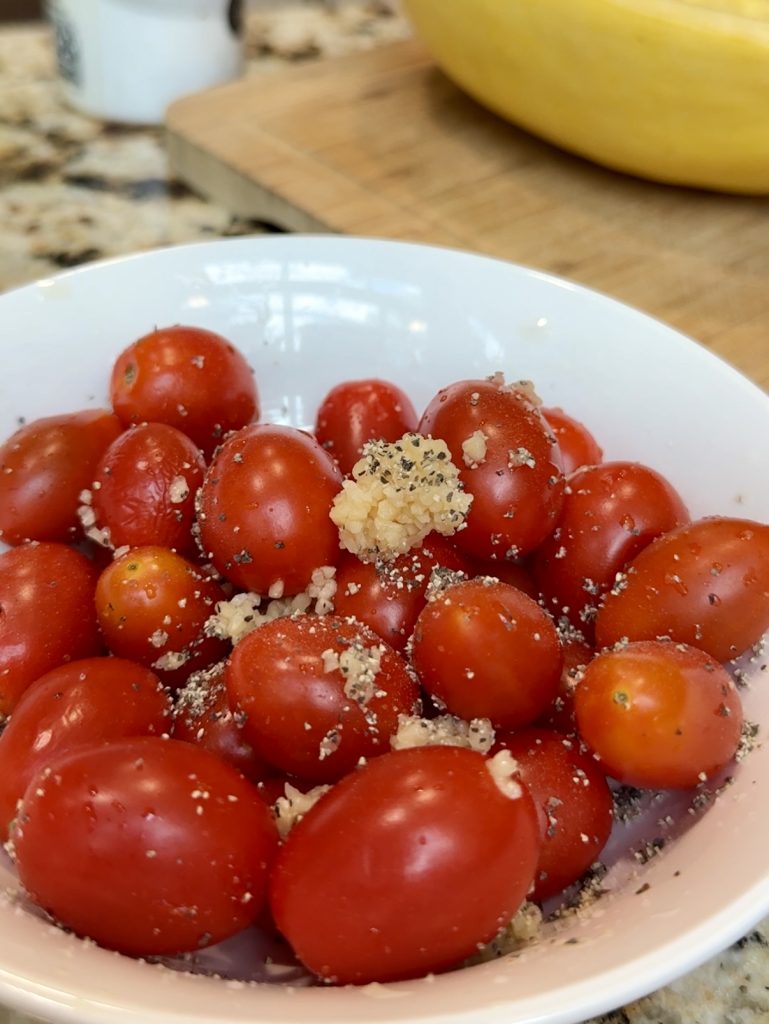
In a small bowl, combine the cherry tomatoes, remaining olive oil, minced garlic, Italian seasoning, and salt and pepper. Stir to coat evenly. Spoon the tomato mixture evenly over and around the feta in each squash half. The tomatoes will burst and release their juices during roasting, mixing with the feta and the natural liquid from the squash to form the sauce.
Step 4: Roast
Place the baking dish in the preheated oven and roast for 50 to 60 minutes until the squash is completely fork-tender when pierced through the thickest part of the flesh. The tomatoes should be burst and caramelized, and the feta should be golden and soft. The timing will vary slightly depending on the size of your squash, so check at the 50-minute mark and continue roasting if needed.
Step 5: Scrape and Mix
Remove from the oven and use a fork to scrape the spaghetti squash into strands, working from the outside edges inward toward the feta. There will be some extra liquid pooled in the squash halves, which is completely normal. Don’t drain it. As you mix everything together, the liquid absorbs into the sauce and becomes part of the creamy feta coating. Mix thoroughly, breaking up the feta and stirring the tomatoes and garlic throughout until the whole dish is cohesive and creamy.
Step 6: Serve
Top with fresh basil, extra crumbled feta if desired, and additional seasoning to taste. Serve directly from the squash halves for a simple, impressive presentation, or scoop into bowls.
Storing and Reheating
Leftover baked feta spaghetti squash stores well for up to 4 days in the refrigerator in an airtight container. The flavors continue to develop as it sits, so leftovers are often even better the next day. The squash will release a little more liquid in the fridge, which is normal. Stir it together before reheating.
To reheat, microwave in 60-second intervals stirring between each until heated through, or warm in a skillet over medium heat with a small splash of olive oil. The skillet method is preferred since it helps evaporate any excess moisture and gives the dish a slightly more cohesive texture than the microwave.
This dish does not freeze well. Spaghetti squash becomes watery and loses its texture after freezing and thawing, and the feta sauce separates. For best results, enjoy it fresh or refrigerated within a few days.
How to Serve Baked Feta Spaghetti Squash
This dish is a complete, satisfying dinner on its own served directly in the roasted squash halves. The presentation is naturally impressive without any extra work, which makes it a great option for a weeknight dinner that feels a little more special than average.
For extra protein, stir in cooked shredded chicken, crumbled turkey sausage, or a can of drained white beans right after scraping the squash into strands. The feta sauce is rich enough to coat all of it and each addition blends seamlessly into the finished dish. A simple green salad with a lemon vinaigrette alongside cuts through the richness of the feta beautifully and rounds out the meal.
For a bread lover’s version of this dinner, serve with a thick slice of crusty sourdough for scooping up the creamy tomato feta sauce. It’s not low-carb anymore but it’s absolutely delicious.
If you love easy one-pan dinners built around a creamy melted cheese sauce, the Creamy Boursin Chicken Sausage Orzo Bake follows the same general principle and is just as simple. And for another lighter, veggie-forward weeknight dinner that comes together fast, the Lemon Dijon Baked Salmon is worth keeping in the rotation.
Frequently Asked Questions About Baked Feta Spaghetti Squash
Raw spaghetti squash is one of the toughest things to cut in the kitchen. Use the sharpest knife you have, place the squash on a stable cutting board, and cut firmly through the center from stem to end with a rocking motion. If the squash is very resistant, microwave it whole for 3 to 4 minutes first to soften the skin and make cutting significantly easier. You can also pierce it several times with a knife and microwave for 5 minutes, which softens it enough to cut cleanly without pre-roasting.
Yes. The recipe notes this as an option and it works well. The difference is that a block of feta stays concentrated in the center of the squash and melts more cohesively into a creamy sauce as you mix it. Crumbled feta distributes more evenly throughout but has a slightly less dramatic melting effect. Either works, and the flavor is the same. If using crumbled feta, scatter it over the tomatoes rather than placing it in a single block.
Pierce the thickest part of the squash flesh with a fork. It should slide in easily with little resistance, similar to testing a baked potato. The flesh should pull away in strands when you drag the fork across it rather than resisting or breaking in chunks. If the outside looks done but the center is still firm, cover loosely with foil and continue roasting for another 10 minutes.
Use a regular dinner fork and scrape from the outside edge of the squash half toward the center in long strokes. The flesh will naturally separate into noodle-like strands. Work all the way around the squash before mixing everything together. Don’t worry about getting every last bit of flesh out. The outer layer closest to the skin tends to be tougher and a little stringier, so leaving a thin layer behind is fine.
Spaghetti squash releases water as it roasts, which is completely normal. The key is not to drain it before mixing since that liquid becomes part of the sauce when combined with the melted feta. Once you start scraping and stirring everything together, the liquid absorbs into the feta coating and the strands of squash and the dish comes together into a cohesive, creamy result. If there is a lot of excess liquid after thorough mixing, you can drain a small amount, but usually stirring vigorously is enough
Baked Feta Spaghetti Squash
Ingredients
Method
- Preheat the oven to 400℉ (200°C).
- Prepare spaghetti squash: Carefully cut the spaghetti squash in half lengthwise. Scoop out the seeds. Place the halves of squash cut side up on a baking dish or casserole dish. A rimmed baking sheet will work too. Coat it in olive oil and salt and pepper. Add a block of feta cheese in the center of each spaghetti squash half.
- Prepare feta mixture: In a small bowl, combine the cherry tomatoes, remaining olive oil, minced garlic, Italian seasoning, and salt and pepper. Stir to combine. Divide the mixture evenly in each of the spaghetti squash halves on top of the feta cheese.
- Bake: Roast in the oven for 50-60 minutes in the preheated oven, until the squash is fork tender.
- Mix: Scrape spaghetti squash into strands with a fork. There will be some extra liquid but don’t worry! It will absorb as you mix it with the spaghetti squash and feta. Mix everything really well until the feta gets melty and creamy.
- Serve: Top it with basil, more feta or more seasoning if needed(optional). Enjoy!
Notes
- For extra protein, stir in cooked shredded chicken, turkey sausage, or white beans.
- Use crumbled feta if you don’t have a block
- Make it dairy-free by swapping feta for a vegan feta-style cheese.
Nutrition
Nutrition information is automatically calculated, so should only be used as an approximation.