
Flank Steak Carne Asada Bowls
If you’ve been making carne asada with just lime juice and cumin, this marinade is going to change everything. This version uses orange juice, soy sauce, lime juice, olive oil, fresh garlic, cilantro, and onion to create something that tenderizes the steak while building a deeply layered flavor you can taste all the way through the meat. Thirty minutes gets you there. Eight hours gets you somewhere extraordinary. Either way, what comes off the cast iron is seared, juicy, and sliced across the grain into strips that are as good in a bowl as they are in a taco.
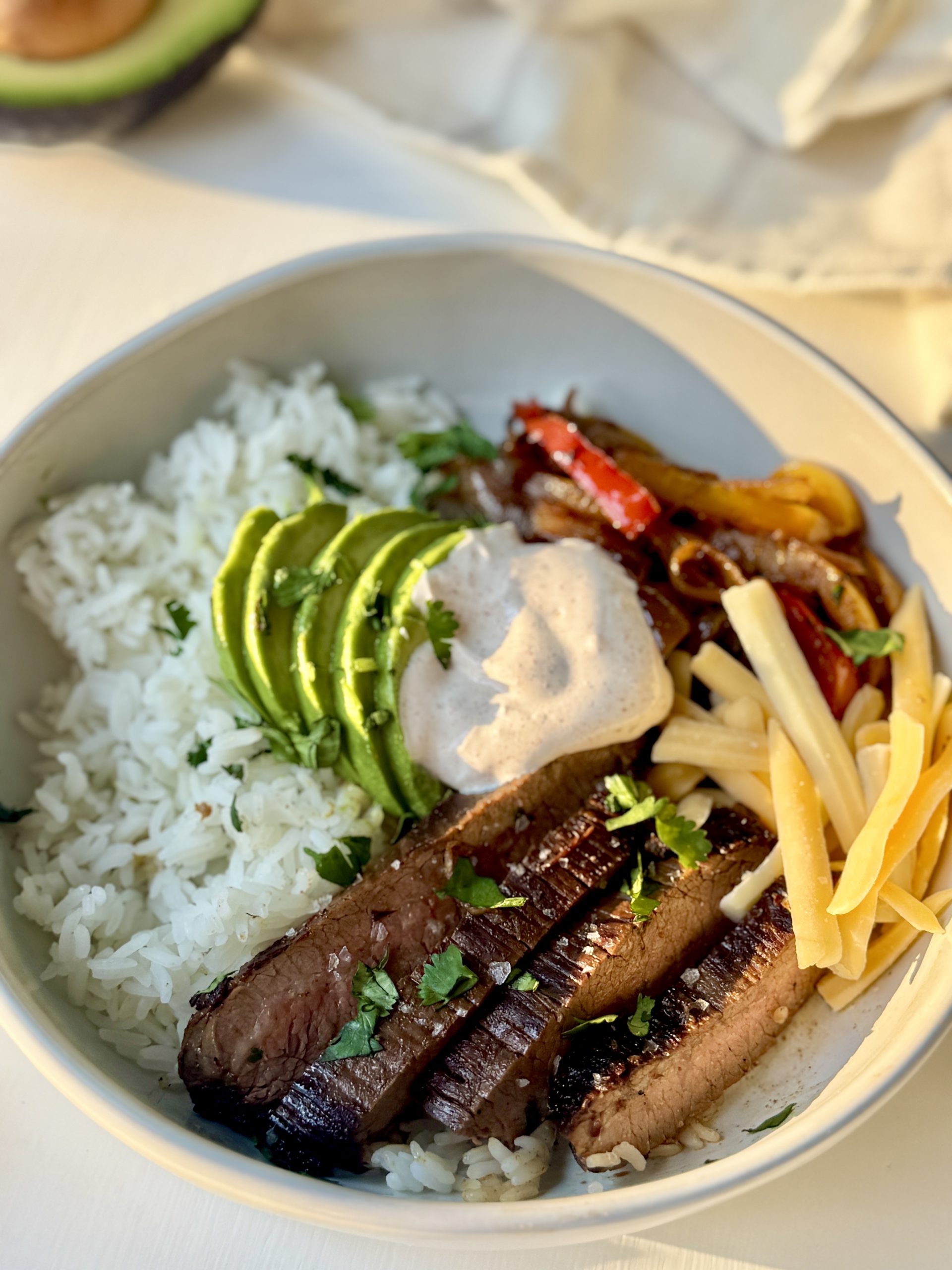
The bowl format here is the move. Jasmine rice as the base, sautéed peppers and onions cooked in the same pan as the steak, fresh avocado, salsa, and a quick creamy taco sauce that takes about two minutes to stir together and makes everything taste finished. It’s the kind of meal that feels like it came from a restaurant and comes together on a weeknight without any real effort once the steak has had time to marinate.
Ingredients Needed to Make Flank Steak Taco Bowls
Three components, each simple on its own. Here’s everything you need:
The Flank Steak and Marinade
- Flank steak
- Olive oil (the fat base of the marinade that helps it cling to the meat)
- Orange juice (the natural acids tenderize the steak and add a subtle citrus sweetness)
- Soy sauce (adds umami depth and helps the marinade penetrate the meat)
- Lime juice (bright, tangy, and essential for authentic carne asada flavor)
- Garlic cloves, minced
- Onion, finely sliced
- Fresh cilantro, chopped
- Cumin
- Chili powder, to taste
For the Bowls and Tacos
- Bell pepper, sautéed
- Yellow or white onion, sautéed
- Salsa
- Cooked jasmine rice
- Flour or corn tortillas (for tacos)
- Avocado
The Taco Sauce
- Sour cream or plain Greek yogurt
- Mayonnaise
- Fresh lime juice
- Taco seasoning
- Dried parsley
- Water to thin if needed
How to Make Flank Steak Carne Asada Bowls
One cast iron pan, a great marinade, and about 20 minutes of active cook time. Here’s how it all comes together.
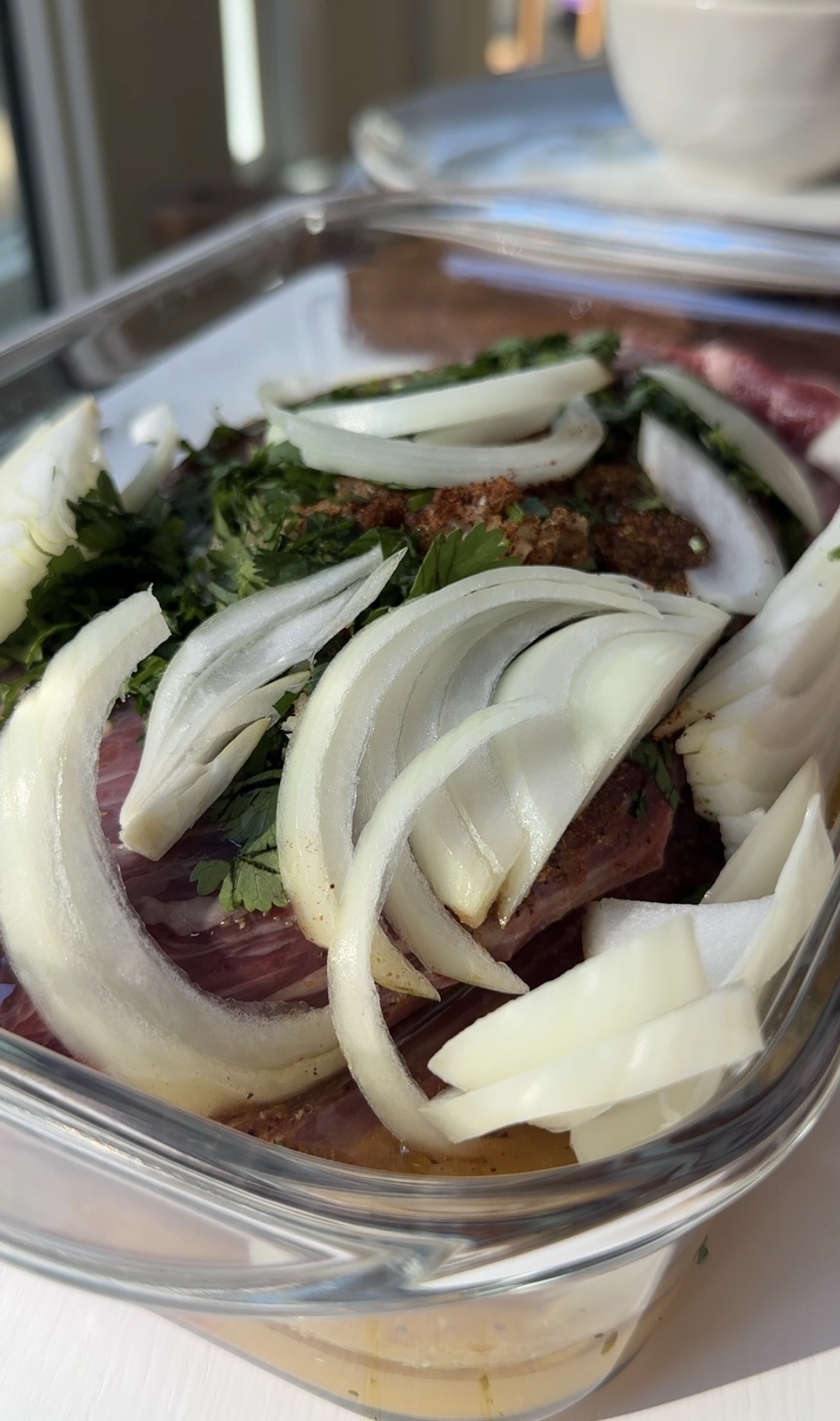
Step 1: Marinate the Steak
Place the flank steak in a large zip-lock bag or shallow dish. Add the olive oil, orange juice, soy sauce, lime juice, minced garlic, sliced onion, cilantro, cumin, and chili powder. Toss to coat every surface of the steak thoroughly. Seal the bag or cover the dish and refrigerate for at least 30 minutes. For the deepest, most developed flavor, marinate for up to 8 hours. Before cooking, remove the steak from the marinade and reserve about half a cup of the marinade liquid to use during cooking.
Step 2: Sear the Steak
Heat a cast iron skillet over medium-high heat until very hot. This is important. A cast iron that hasn’t come fully to temperature won’t give you the sear you’re looking for. Add the steak and leave it completely undisturbed for 5 minutes. Resist every urge to move it. Letting it sit is what develops the dark, caramelized crust. Flip and cook for another 5 minutes on the second side. If desired, pour the reserved marinade over the steak in the last minute or two of cooking for extra moisture and flavor. If your steak is large, cook in batches rather than crowding the pan.
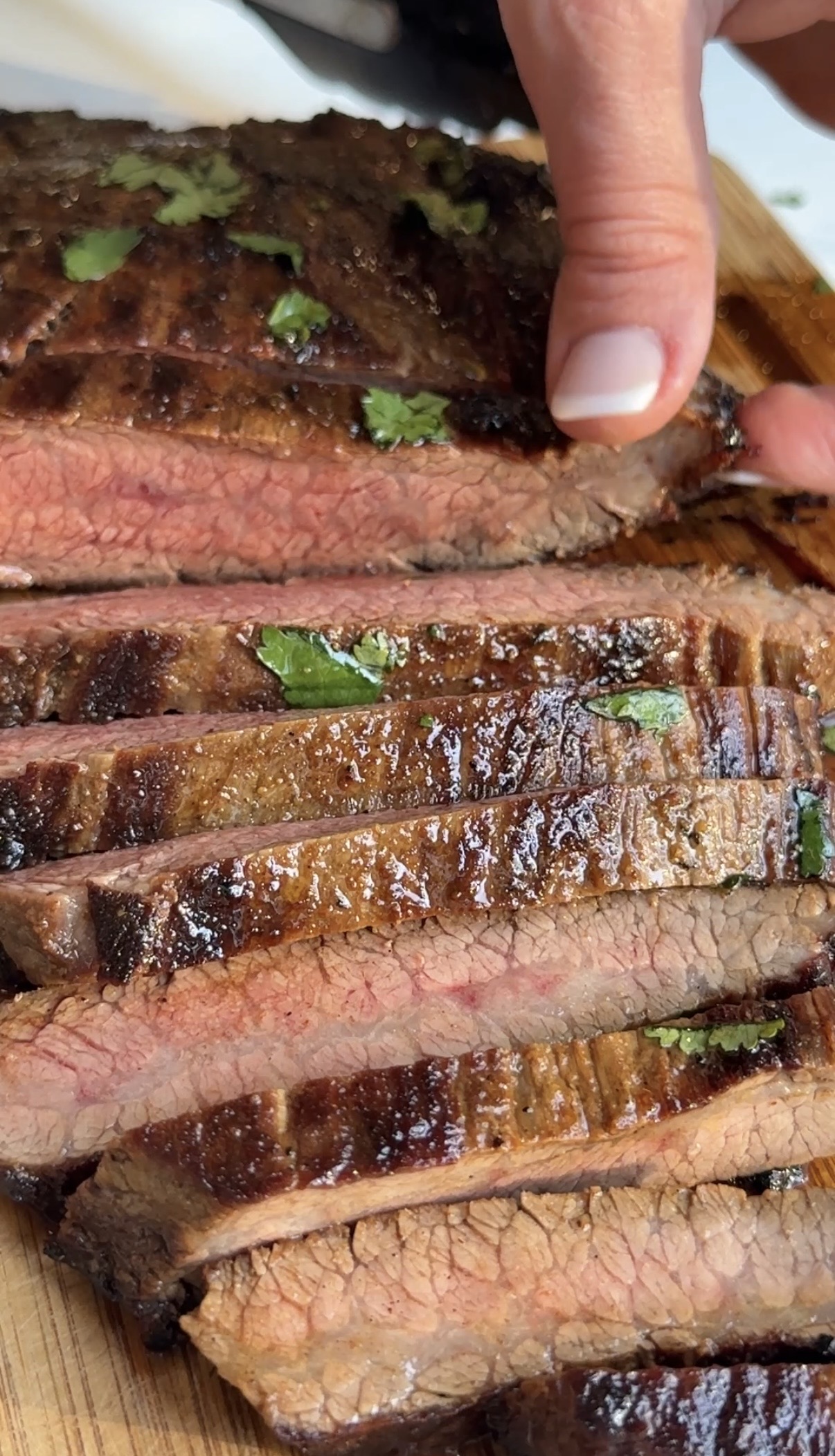
Step 3: Rest and Slice
Remove the steak from the heat and let it rest on a cutting board for 10 minutes. This rest is not optional. Slicing immediately causes all the juices to run out onto the cutting board instead of staying in the meat. After resting, slice thinly across the grain. Slicing against the grain cuts through the long muscle fibers and produces tender, easy-to-chew strips rather than chewy, stringy ones. Look at the direction of the muscle lines running along the steak and cut perpendicular to them.
Step 4: Sauté the Peppers and Onions
While the steak rests, slice the bell pepper and onion into strips and add them to the same cast iron skillet over medium heat. Cook for 3 to 4 minutes, stirring occasionally, until softened and slightly charred at the edges. Sprinkle with a pinch of taco seasoning and toss to coat. Cooking them in the same pan as the steak means they pick up all the residual browned bits and marinade flavor left behind.
Step 5: Make the Taco Sauce
In a small bowl, whisk together the sour cream or Greek yogurt, mayo, lime juice, taco seasoning, and dried parsley until smooth. Add a small splash of water if the sauce is too thick to drizzle easily. Taste and adjust the taco seasoning as needed. This sauce takes two minutes to make and ties every element of the bowl together.
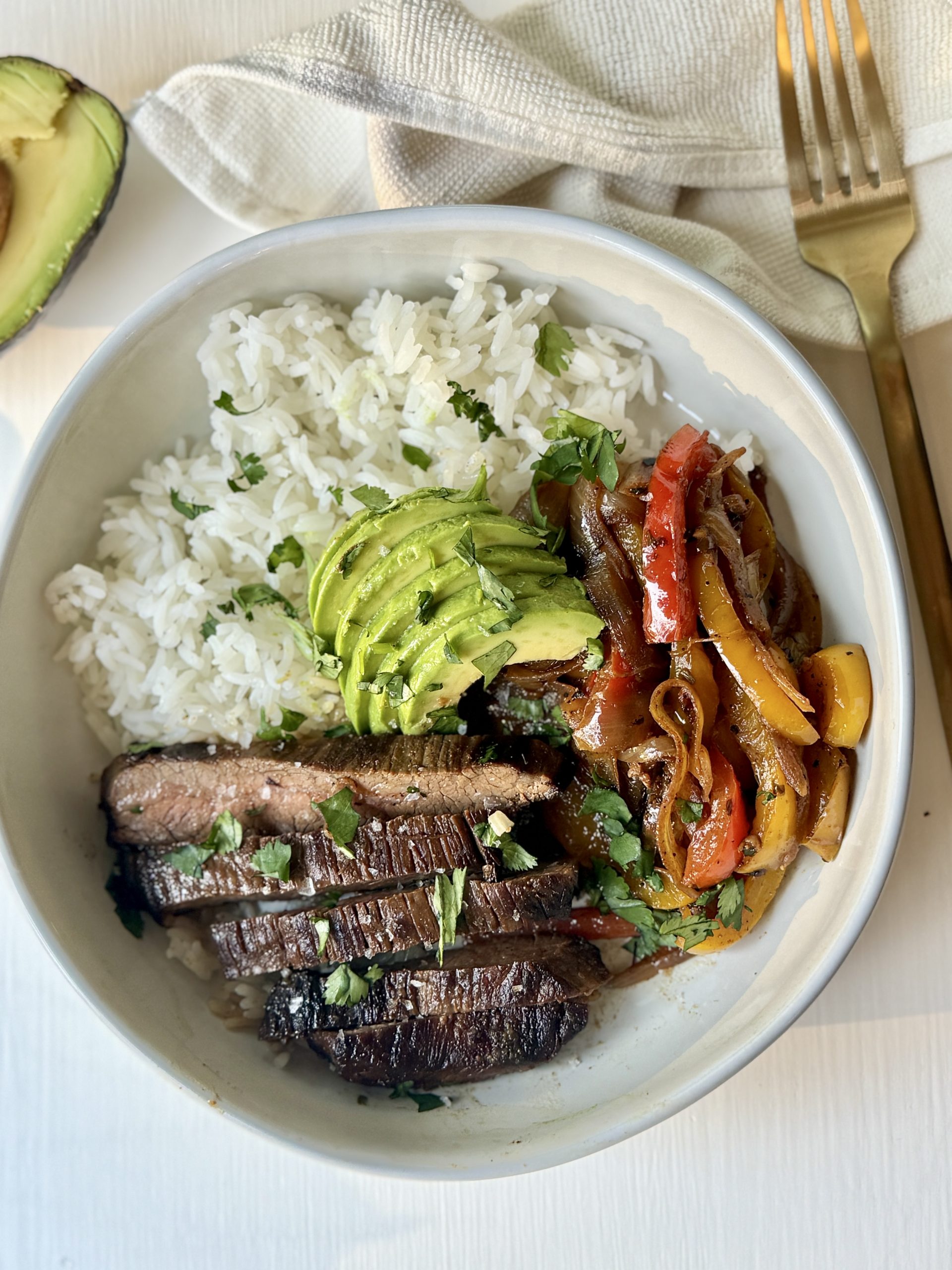
Step 6: Assemble the Bowls
Spoon jasmine rice into each bowl as the base. Add a generous portion of sliced carne asada, the sautéed peppers and onions, fresh avocado, and a spoonful of salsa. Drizzle the creamy taco sauce over the top and serve immediately.
Storing and Reheating
The sliced carne asada keeps beautifully in the refrigerator for up to 4 days stored in an airtight container with any remaining juices from the cutting board poured over the top. The juices keep the meat moist during storage and add flavor as it sits.
To reheat the steak, warm it in a skillet over medium heat with a splash of water or broth for 2 to 3 minutes until just heated through. Avoid overheating since flank steak can tighten and become chewy if it gets too hot the second time around. The microwave works in a pinch on medium power in short intervals. Keep the rice, peppers, and toppings stored separately and assemble bowls fresh at each meal.
The taco sauce keeps in the refrigerator for up to 5 days in a sealed jar. Stir before using since it can thicken slightly as it chills.
More Bowls Recipes to Check Out
How to Serve Flank Steak Carne Asada
The bowl format is the most complete and satisfying way to serve this. Rice on the bottom, steak and peppers in the middle, avocado and salsa on top, taco sauce drizzled over everything. That combination covers every texture and flavor note you want in a meal.
For carne asada tacos, warm flour or corn tortillas in a dry skillet and load them with the sliced steak, a few strips of sautéed pepper and onion, a spoonful of salsa, and a drizzle of the taco sauce. Double up on corn tortillas since the filling is generous and a single corn tortilla will tear. Squeeze fresh lime over the top right before eating.
This carne asada also works incredibly well for meal prep. Cook the full batch on Sunday, slice, and refrigerate. Throughout the week it goes into bowls, tacos, quesadillas, nachos, and breakfast burritos without any additional cooking required. If you love flank steak but want something saucier and slower, these Chuck Roast Tacos use a Dutch oven braise to get a similarly bold beef flavor from a completely different approach. And if you’re building out a bowl rotation, the Street Corn Chicken Potato Bowl and my famous Loaded Potato Taco Bowl are other weeknight bowl recipes worth adding to the lineup.
Frequently Asked Questions About Carne Asada Taco Bowls
Carne asada is a Mexican preparation of grilled or seared beef, typically marinated in citrus, garlic, and herbs before cooking. The name translates literally to “grilled meat.” It’s most commonly made with flank steak or skirt steak because both are thin, flavorful cuts that cook quickly over high heat and slice well across the grain. This recipe uses a cast iron skillet instead of a grill, which produces a similar sear and caramelized crust without needing outdoor equipment.
The natural acids and enzymes in orange juice help break down the muscle fibers in flank steak, contributing to a more tender result after marinating. It also adds a subtle sweetness that balances the lime and soy sauce without making the finished steak taste fruity. This combination of citrus acid plus soy sauce plus fat is a highly effective tenderizing formula for tougher, thinner cuts like flank steak.
Thirty minutes is the minimum and will get you noticeably better flavor than no marinating at all. Four to six hours is the sweet spot for flavor and tenderness without over-tenderizing. Eight hours is the maximum. Beyond eight hours the acid in the citrus can start to break down the meat fibers too aggressively, resulting in a mushy texture on the exterior. If you’re planning ahead, an overnight marinade works if you start it before bed and cook it in the morning, keeping total time within the 8-hour window.
Flank steak has long, clearly visible muscle fibers running in one direction across the surface of the meat. Slicing with the grain means cutting parallel to those fibers, which produces long, chewy strips. Slicing across the grain means cutting perpendicular to those fibers, which shortens each fiber and makes every bite dramatically more tender and easier to chew. Look at the surface of the rested steak before cutting. The muscle lines will be obvious. Turn your knife 90 degrees to those lines and slice thinly on a slight angle.
Flank Steak Carne Asada Bowls
Method
- Place the flank steak in a large pan or ziplock bag. Add all of the marinade ingredients and toss to coat well. Cover and place in the fridge and marinate for at least 30 minutes or up to 8 hours. When ready to cook, reserve about 1/2 cup of the marinade to use during cooking.
- Heat a cast-iron skillet over medium-high heat. Once the skillet is hot, add the meat. Leave undisturbed for 5 minutes, then flip to the other side and cook for 5 minutes more. Pour reserved marinade if desired on top. Depending on the size of your meat, you might have to work in batches. Remove from heat and let’s sit for 10 minutes before slicing. Slice across the grain and enjoy.
- If you choose to use peppers and onions as a side, slice into strips and then saute in the same pan as the meat for 3-4 minutes until softened, and then add a sprinkle of taco seasoning.
- Serve with your favorite toppings and/or the sauce suggested in the recipe. Enjoy!
Nutrition information is automatically calculated, so should only be used as an approximation.