
Beef Udon Noodle Stir-Fry
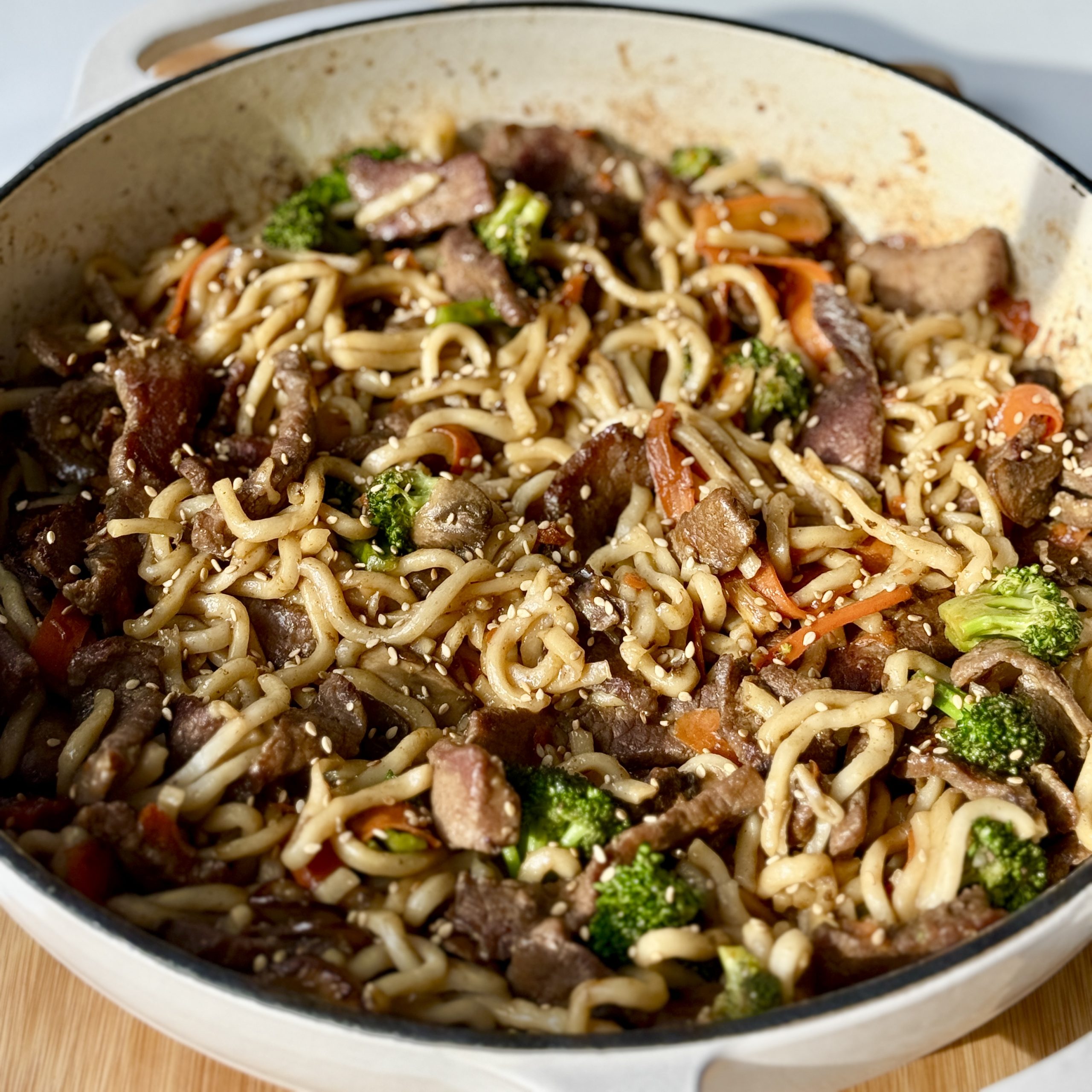
This is the Beef Udon Noodle Stir-Fry replaces your takeout order. It comes together in 30 minutes, uses fresh udon noodles from the refrigerated section of most grocery stores, and the technique behind the beef produces a tenderness that makes every bite feel like it came from a restaurant kitchen rather than a weeknight at home.
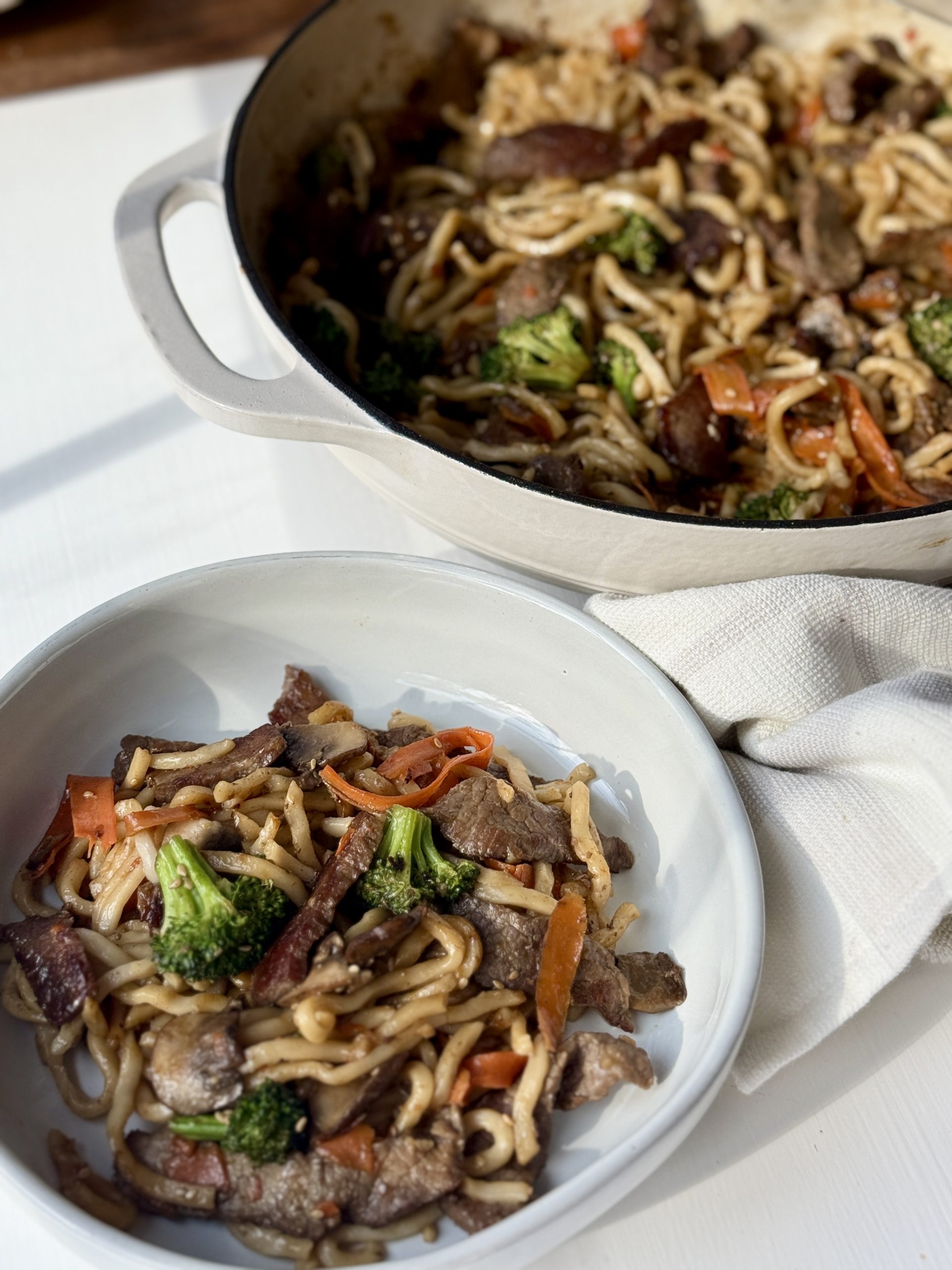
The sauce is the formula worth memorizing. Soy sauce, oyster sauce, sesame oil, rice vinegar, garlic, and a small amount of cornstarch to thicken it into something that coats rather than pools at the bottom of the pan. It goes on quickly, comes together in 2 to 3 minutes of tossing over high heat, and produces noodles that are glossy, deeply flavored, and satisfying in a way that simple noodle dishes reliably are when everything is done correctly.
Why You’ll Love This Recipe
The velveting technique changes the beef completely. A small amount of baking soda and a tablespoon of sauce mixed into the sliced beef before cooking tenderizes it at the protein level in just a few minutes. The result is silky, restaurant-quality beef that would otherwise require a much more expensive cut to achieve.
Fresh udon noodles are widely available and cook in 2 minutes. Found in the refrigerated section at most grocery stores and any Asian market, fresh udon noodles have a thick, chewy texture that dried noodles can never replicate. They’re one of the best convenience ingredients in any weeknight pantry.
The vegetable list is completely flexible. Whatever is in the refrigerator works. The sauce and the noodles are the constant and the vegetables are the variable. This recipe is genuinely different every time you make it based on what you have.
– Lyuda
Ingredients Needed to Make Beef Udon Noodle Stir-Fry
The Beef
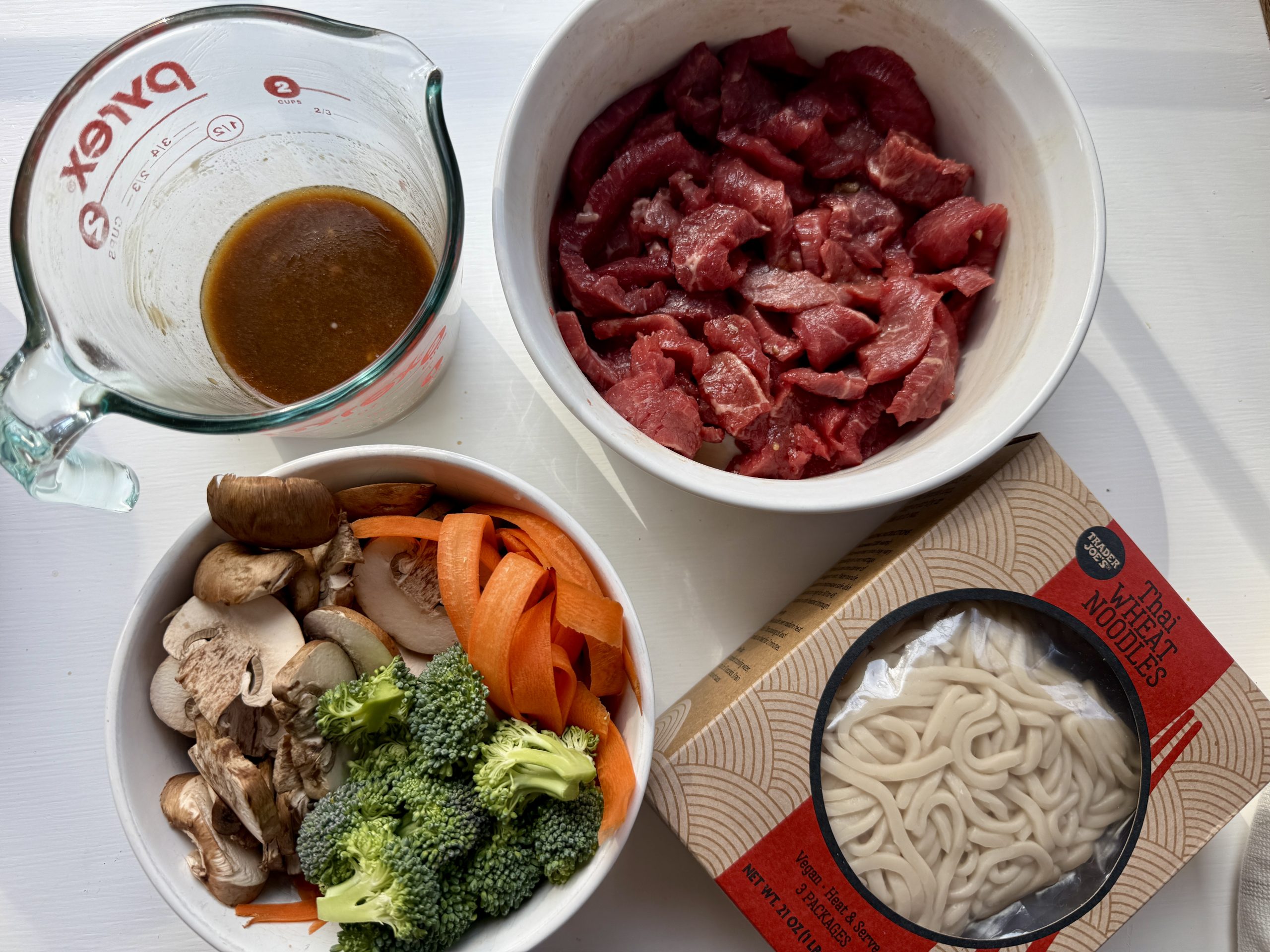
- Thinly sliced beef (top sirloin, flank, skirt, or ribeye; slice against the grain for maximum tenderness; partially freezing the beef for 20 to 30 minutes before slicing makes thin, even cuts much easier)
- Baking soda (the velveting agent that tenderizes the beef before cooking)
- Olive oil
The Noodles and Vegetables
- Fresh udon noodles, refrigerated (thick, chewy, and far superior to dried udon in a stir-fry context; found in the refrigerated section at most mainstream grocery stores and all Asian markets)
- Vegetables of choice: cremini or shiitake mushrooms, shredded carrots, bell pepper strips, small broccoli florets, shredded cabbage, baby bok choy, or thinly sliced yellow onion (choose one or several; 2 to 3 cups total)
The Sauce
- Cooking oil
- Minced garlic (bloomed in the sauce for a deeper, sweeter garlic flavor)
- Soy sauce (the primary salt and umami base)
- Oyster sauce (adds a slightly sweet, briny depth that soy sauce alone doesn’t have)
- Rice vinegar (adds a bright, subtle acidity that keeps the sauce from being heavy)
- Sesame oil (the toasty, nutty finishing flavor that signals this as an Asian-inspired dish)
- Cornstarch or tapioca starch (thickens the sauce into a glossy coating that clings to the noodles)
- Sesame seeds for garnish
See the recipe card below for exact ingredient amounts, nutritional information, and detailed instructions.
How to Make Beef Udon Noodle Stir-Fry
Step 1: Blanch the Noodles
Bring a pot of water to a full boil. Add the fresh udon noodles and blanch for exactly 2 minutes. Drain immediately through a wire mesh strainer and set aside. Don’t overcook them past 2 minutes since they’ll continue cooking in the hot pan with the sauce. The blanching loosens them from each other and gives them the right pliable texture for tossing in the wok. If the noodles stick together after draining, toss with a small drizzle of sesame oil to separate them.
Step 2: Make the Sauce
In a small bowl, whisk together the cooking oil, minced garlic, soy sauce, oyster sauce, rice vinegar, sesame oil, and cornstarch until completely smooth with no cornstarch lumps remaining. Mixing the cornstarch into the cold sauce before adding it to the hot pan ensures it thickens evenly and smoothly. Set aside.
Step 3: Velvet the Beef
Place the thinly sliced beef in a medium bowl. Add the baking soda and 1 tablespoon of the prepared sauce. Toss to coat every slice evenly. Let sit for at least 5 minutes while you prepare the vegetables. The baking soda raises the pH of the surface of the beef, which inhibits the proteins from bonding tightly during cooking and produces a notably more tender texture. Rinse if you use more than 5 minutes marinating time to avoid a slightly alkaline taste.
Step 4: Sear the Beef
Heat a large skillet or wok over medium-high heat until very hot. Add the olive oil and let it heat until shimmering. Add the beef slices in a single layer and let them cook undisturbed for 1 minute to develop a sear, then stir-fry for another minute until just cooked through. Don’t crowd the pan. Cook in two batches if needed. Remove the seared beef and set aside.
Step 5: Stir-Fry the Vegetables
In the same hot pan, add a drizzle of oil and the vegetables. Stir-fry over medium-high heat for about 3 minutes, tossing constantly, until the vegetables are slightly tender but still have some bite and color. The vegetables should cook quickly in the residual heat of the pan.
Step 6: Combine Everything
Return the seared beef to the pan. Add the blanched udon noodles and pour the prepared sauce evenly over everything. Toss continuously for 2 to 3 minutes over medium-high heat until the noodles are evenly coated, the sauce has thickened into a glossy coating, and everything is heated through. Use tongs for the best tossing control.
Step 7: Taste and Serve
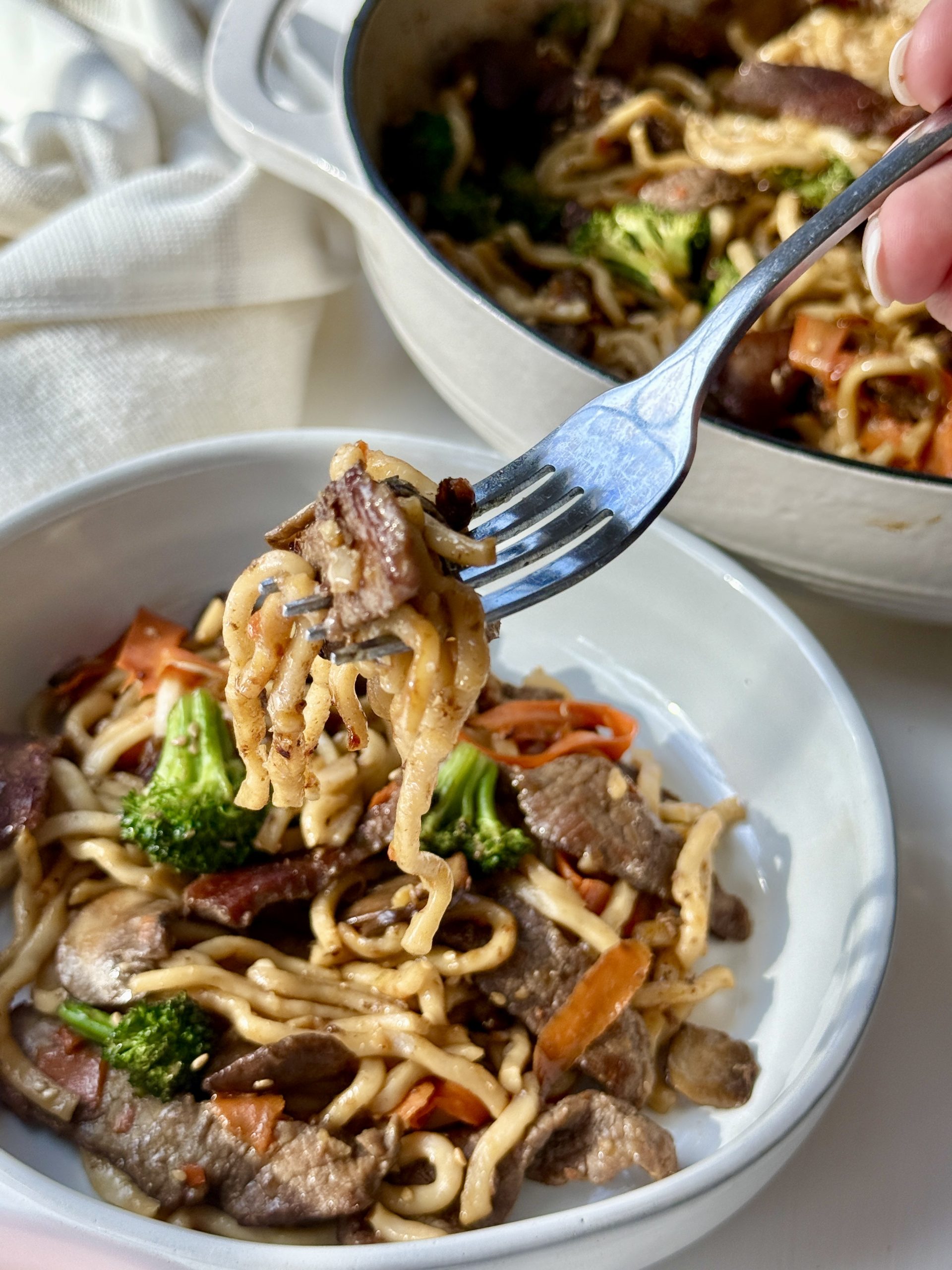
Taste and adjust with a small splash of soy sauce if needed. Transfer to a serving platter or bowls and scatter sesame seeds over the top. Serve immediately while the noodles are still glossy and hot.
If you are looking for more delicious dinner recipes, you’ll love my Sweet Potato and Turkey Skillet and One-Pan Greek Parmesan Chicken and Veggies!
How To Store Beef Udon Noodle Stir-Fry
Store leftovers in an airtight container in the refrigerator for up to 3 days. The noodles will absorb more sauce as they sit and the dish will be slightly drier the next day. Add a small splash of soy sauce and a drizzle of sesame oil when reheating to refresh the coating.
Reheat in a skillet over medium heat with a splash of soy sauce, tossing frequently until heated through. The microwave works on medium power in 60-second intervals stirring between each. The stovetop is significantly better for maintaining the texture of the noodles and the vegetables.
This dish does not freeze well. Udon noodles become mushy after freezing and thawing. For best results, enjoy it fresh or from the refrigerator within a few days.
Serving Suggestions
Serve directly from the wok into deep bowls with extra sesame seeds and sliced green onions over the top. A drizzle of chili oil or a spoonful of chili crisp adds heat and a deep savory note that pairs beautifully with the sesame and soy sauce base. A soft-boiled egg halved and placed on top adds richness and extra protein that makes the bowl feel like a complete restaurant dish.
For a full spread, serve alongside a simple cucumber salad dressed with rice vinegar, sesame oil, and a pinch of sugar. Steamed edamame with flaky sea salt is another easy, natural accompaniment that requires no cooking beyond heating.
For another bold Asian-inspired noodle dinner that comes together just as quickly in the same one-pan format, this Beef and Noodles Stir Fry recipe uses rice noodles and a slightly different sauce profile in the same satisfying weeknight stir-fry spirit. And for a Korean-inspired beef bowl that uses the same quick-cooking ground beef technique in a completely different direction, these Korean Ground Beef Bowls belong in the same weeknight rotation.
Frequently Asked Questions About Beef Udon Noodle Stir-Fry
If you make this, I’d love to hear how it turned out – a star rating or a note in the comments helps others find the recipe and helps me know what’s working in your kitchen. Tag me @gracefilledkitchen in your photos on social media so I can see your creations.

Beef Udon Noodles Stir-Fry
Method
- Place the thinly sliced beef in a bowl. Add the baking soda and 1 tablespoon of the prepared sauce. Toss to coat and let marinate for a few minutes while you prep everything else.
- In a small bowl, whisk together all the sauce ingredients, besides the bone broth. Stir well to let the cornstarch fully dissolve, then add bone broth and mix again. Set aside.
- Heat a large skillet or wok over medium-high heat with the olive oil. Once hot, add the beef in a single layer and stir-fry for about 2 minutes until nicely seared. Remove and set aside.
- While the beef is cooking, bring a pot of water to a boil. Blanch the fresh udon noodles for 2 minutes. Drain through a wire mesh strainer and set aside. Don’t overcook, or they’ll lose their signature chew.
- In the same pan as the meat, add a drizzle of oil and the vegetables. Stir-fry for 3 minutes until slightly tender but still with some bite.
- Return the beef to the pan. Add the blanched udon noodles and pour the sauce over everything. Toss and stir-fry for 2 to 3 minutes until the noodles are evenly coated and have absorbed the sauce.
- Taste and adjust with a splash of soy sauce if needed. Transfer to a serving platter and garnish with sesame seeds. Serve hot.
Notes
- The baking soda tenderizes the beef through a process called velveting, the same technique used in Chinese restaurant cooking. Even a 5-minute marinate makes a noticeable difference in the tenderness of the finished beef.
- Blanching the noodles first rather than adding them raw to the pan makes them much easier to toss and separate without breaking.
- High heat is essential for a proper stir-fry. If the pan isn’t hot enough the vegetables steam and the beef braises rather than searing.
- Whisk the cornstarch into the cold sauce before adding it to the hot pan so it dissolves evenly without clumping.
Nutrition information is automatically calculated, so should only be used as an approximation.
If you make this, I’d love to hear how it turned out.
Leave a comment and star rating below!
If you make this, I’d love to hear how it turned out.
Leave a comment and star rating below!
I have never made an Asian inspired recipe that matched the flavor of great takeout as closely as this recipe! I swapped the beef for chicken and loved it that way as well. Will be making this again!
Thank you so much for taking the time to share your feedback, Natalie!